Join Our Team

The Cold Truth: When is it Too Cold to Install a New Roof?
December 10, 2025
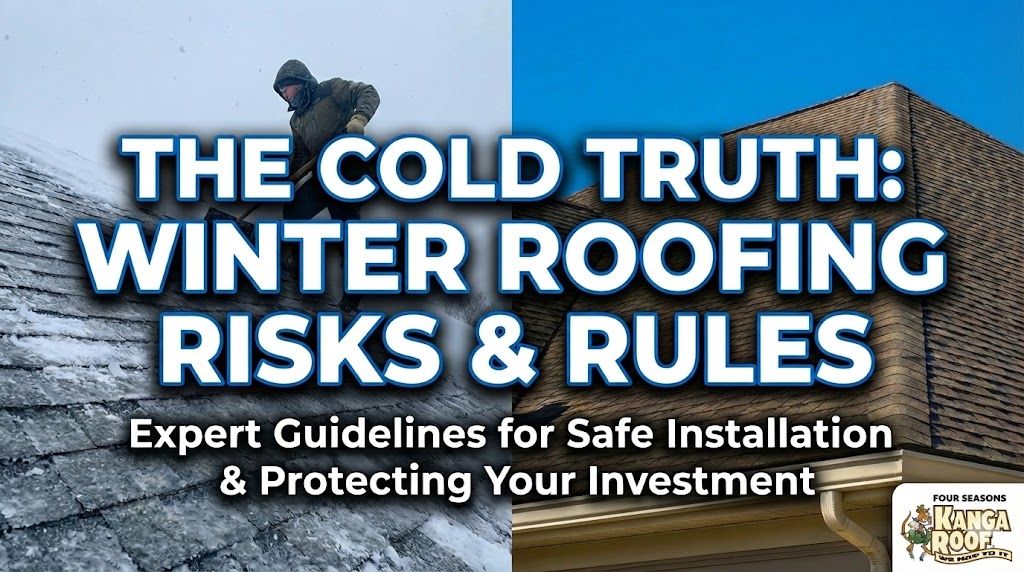
We’ve all seen the dramatic TV commercials: roofers shoveling snow before installing a new roof. But is it safe? Is it smart? The cold reality is that roofing in frigid temperatures carries significant risks—risks that can void your warranty and lead to premature performance issues. While shingle manufacturers don’t publish a strict “no-install” temperature, they do mandate rigorous cold-weather installation guidelines.
So, how do you know if it’s safe to install your asphalt shingle roof in the winter? We break down the essential rules to ensure your investment is protected, and your new roof lasts for decades.
Key Cold Weather Roofing Guidelines
Here are simple rules to help you determine if winter roofing is appropriate for your home:
- Ideal Temperature Threshold: The daytime temperature should ideally be 35°F (1.7°C) or warmer. This temperature range allows asphalt shingles to maintain necessary flexibility and for the crucial sealing strips to activate.
- Opt for SBS Modified Shingles: In consistently colder climates, choosing an SBS (Styrene-Butadiene-Styrene) rubberized shingle is highly recommended. The built-in rubber component provides superior flexibility, significantly reducing the risk of nail blow-through or shingle damage during installation in temperatures as low as 25°F.
- Harness the Power of the Sun: Even if the air is cold, consecutive days (2-3) of direct, strong sunlight are vital. Solar radiation helps warm the roof deck and the shingles, which is essential for activating and properly adhering the thermal seal strips.
- Demand Hand Sealing: In cold weather, the best practice is to hand-seal the shingles. This involves the contractor applying a small bead of additional asphalt mastic or sealant beneath the seal strips of every shingle. Hand-sealing is a proactive measure that guarantees the shingles are secured, even before the thermal strips activate.
- Caution Below Freezing: Be extremely cautious of any installer attempting to work in conditions consistently below freezing (32°F / 0°C). This dramatically increases the chance of cracking, brittle shingles, and improper nail placement, which are major causes of shingle blow-off.
- The Steeper the Roof, the Easier the Install: Surprisingly, a steeper roof pitch offers more temperature flexibility. Steeper roofs are less likely to retain snow and ice after installation, giving the shingles more time to warm up and for the seal strips to fully activate over days or weeks.
- Verify Cold Weather Training: Always ask your contractor about their specific cold weather installation protocols. A reputable roofer will articulate their plan, which should include:
- Hand-sealing all shingles (as mentioned above).
- Storing roofing materials in a warm, indoor heated facility for 24-48 hours before installation to improve shingle flexibility.
- Having materials delivered on the day of installation to minimize exposure to extreme cold.
The Kanga-Roof Commitment
While it’s always best to install roofing when temperatures are above 35°F and sunny, we understand that a roof failure doesn’t wait for ideal weather. Manufacturers offer flexibility for a reason. The true key to a successful winter install is not avoiding the cold but choosing a reliable, knowledgeable contractor who understands and strictly follows all manufacturer cold weather installation guidelines.
Experiencing a winter roofing emergency? Don’t wait. Our team of certified experts can assess your situation, offer temporary repairs until the weather permits, or execute a flawless new roof installation, adhering to every cold weather protocol.
Contact Kanga-Roof today at 586-566-0308 or schedule your appointment online by CLICKING HERE.
I hope this helps bring some clarity to when it is too cold, and as always, I hope you have a “Kanga-Rific” day!
Sincerely,
Bill Burkhardt, Jr.
VP of Marketing – Four Seasons Kanga Roof


YOUR ROOF MATTERS.
Call our team today to learn more about current specials for your roof.