Join Our Team

Why is My Roof Leaking in the Winter? How to Fix Ice Dams and Condensation
December 19, 2025
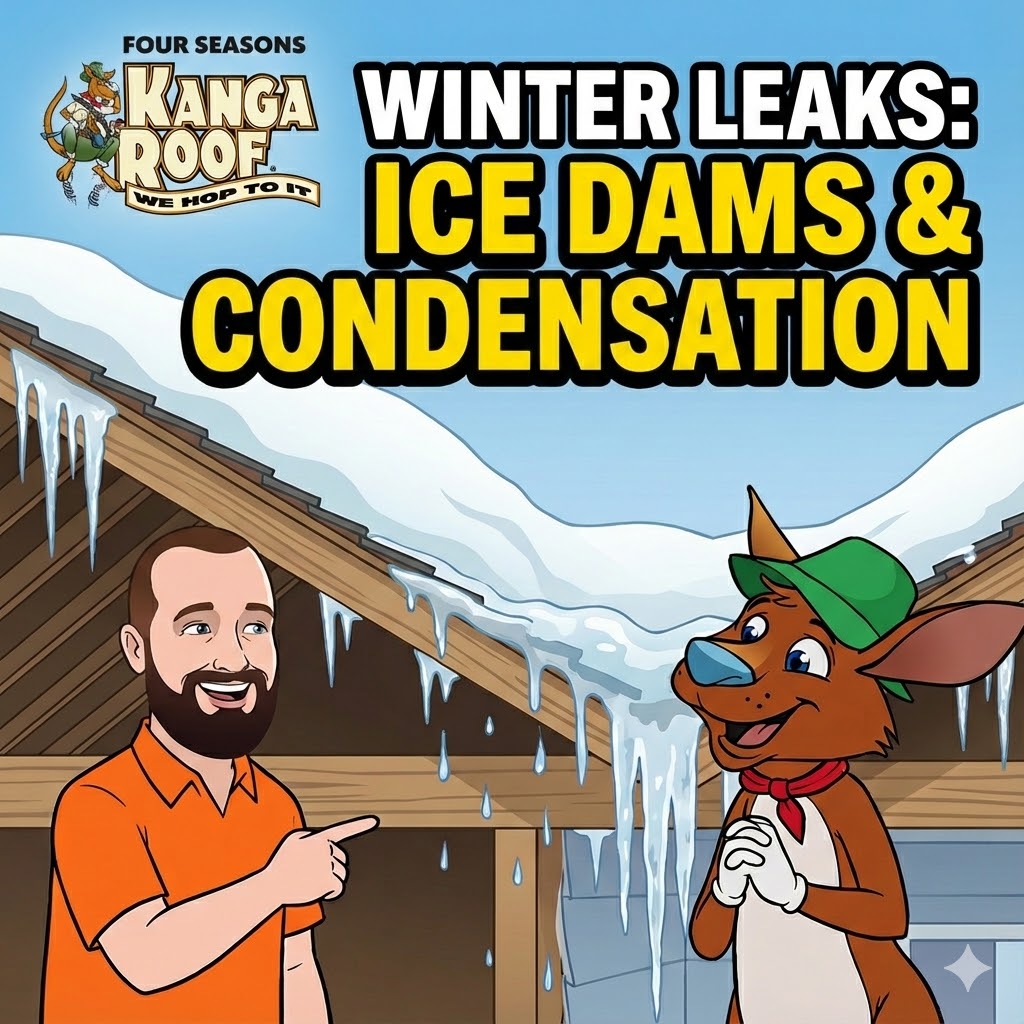
If you’ve ever spotted a mysterious brown stain on your ceiling in the dead of winter and thought, “How did that happen?”—you are not alone. It perplexes many homeowners and business owners when a roof leak springs up after weeks of below-freezing temperatures with no recent rain or snow. So, what causes these seemingly impossible winter roof leaks?
The simple answer is that it often comes down to the integrity of your roofing system’s ventilation and insulation. Contrary to popular belief, you don’t need heavy snow or a sudden downpour for a leak to occur. The root cause is frequently hot, damp air becoming trapped in your attic space. When the attic is not breathing properly and lacks sufficient insulation, this trapped air sets the stage for leaks due to one of two primary reasons:
1. The Ice Dam Problem
The most common culprit for winter roof leaks is ice dams. That warm air trapped in the attic space starts a daily cycle of heating up the eaves (the edges) of your roof. This creates a localized melt-and-freeze cycle. Melted snow or ice water runs down the roof, hits the colder, unheated eaves, and refreezes, slowly building up a ridge of ice—an ice dam.
Ice dams can cause significant damage to your gutters, shingles, flashings, and ultimately force water under the roofing materials and into your home or business.
How to Fix Ice Dams
The key to eliminating ice dams is correcting the overall ventilation of the roofing system, which includes both the intake (usually at the eaves) and the exhaust (usually at the ridge). A qualified roofing contractor will perform a complex but crucial ventilation calculation to ensure proper airflow. Getting the ventilation balance correct will have a major impact on minimizing the chance and severity of an ice dam.
2. The Condensation and Frost Issue
The other major cause for winter roof leaks is often a lack of proper insulation in the attic space. Once an attic is ventilated correctly, its temperature should be very close to the outside air—for example, if it’s 20°F outside, your attic should be around 25-35°F.
If there is insufficient insulation, excess hot, moist air generated inside your conditioned living space escapes or is forced up into this cold attic. When this warm, damp air hits the nearest cold surface (the wood roof deck, rafters, or structural beams), it immediately condensates and freezes.
It is not uncommon for our team to enter an attic and find the entire space covered in a thick layer of frost. When that frost melts—often on a slightly warmer day or due to internal heat fluctuations—it causes what appears to be roof leaks, dripping water onto the ceiling below.
How to Fix Attic Condensation and Frost
You can mitigate this condensation issue by insulating your attic space up to current building code standards, which is typically R-60 (approximately 18 inches of blown-in insulation). Furthermore, ensure all stove, dryer, and bathroom exhaust fans running through the attic are properly insulated and vented outside through the roof or siding, not simply into the attic space. Bringing your insulation up to code significantly reduces the amount of warm, damp air escaping into the cold attic environment.
Take Control of Your Winter Roofing System
While other issues can cause winter leaks (like damaged flashings or improper sealing), issues with ventilation and insulation account for approximately 80% of the winter leak calls we receive.
The good news is that both of these situations are easily and cost-effectively remedied. If you want to make sure your home or business is prepared for the harsh cold of Metro Detroit’s winters, our team is ready to “Hop To It” for you.
You can call us at 586-566-0308 or schedule your professional roof and attic inspection online today.
Sincerely,
Bill Burkhardt, Jr.
VP of Marketing – Four Seasons Kanga Roof


YOUR ROOF MATTERS.
Call our team today to learn more about current specials for your roof.