Join Our Team
What is Safe to Use to Melt Ice on My Roof in Metro Detroit?
January 23, 2026
Bill Burkhardt, Jr.
View Author Info
What is Safe to Use to Melt Ice on My Roof? (Metro Detroit Roofing Safety)
Michigan winters can bring heavy snowfall, freezing temperatures, and dangerous ice buildup along your roof and gutters. If you’ve noticed large icicles or ice dams forming around your home, you may be wondering: What can I safely use to melt ice on my roof without damaging my shingles?
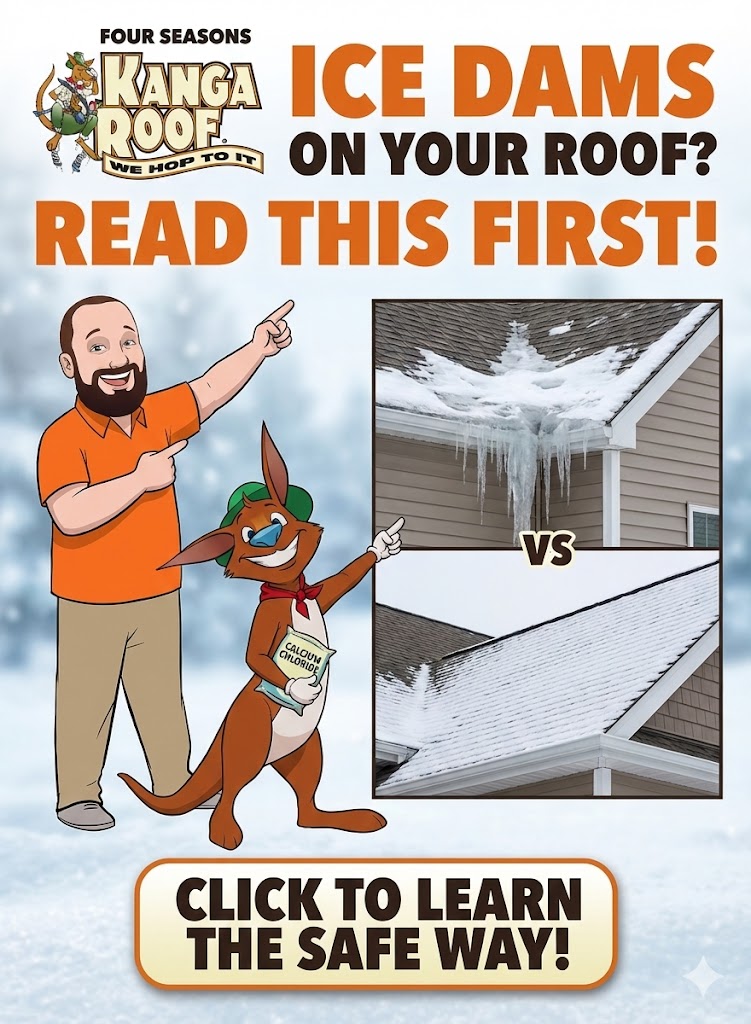
Calcium chloride is one product sometimes used to help melt roof ice and create drainage channels through ice dams. However, not every ice melt product is suitable for roofing materials, and even calcium chloride can cause problems if used improperly.
At Four Seasons Kanga Roof, we help homeowners and business owners throughout Metro Detroit address ice dams, snow accumulation, and winter roofing concerns.
Before reaching for a bag of driveway salt or climbing onto your roof with a shovel, it’s important to understand which products may be appropriate, which methods to avoid, and when professional ice removal is the safest option.
Can You Use Calcium Chloride to Melt Ice on a Roof?
So, what is the safest product to apply to an asphalt shingle roof or other membrane to help melt dangerous snow and ice in Michigan?
The answer is Calcium Chloride.
Here are the key reasons why Calcium Chloride is the recommended, roof-safe ice melt for your Metro Detroit property:
- Exothermic Reaction (Generates Heat): Unlike rock salt, which relies heavily on the sun and becomes ineffective below 20°F, calcium chloride generates its own heat as it dissolves. This makes it far more efficient for melting ice dams and roof build-up in Michigan’s deep freeze.
- Melt More, with Less: Because of its high efficiency, you require significantly less calcium chloride than you would if you were using traditional rock salt (sodium chloride) or less-effective potassium chloride products.
- Non-Corrosive (Relatively): While technically still a salt, calcium chloride is significantly less corrosive to metals (like gutters and flashing) and roofing materials compared to traditional rock salt. This is essential for protecting your gutters and roof flashing.
- No Chemical Burn/Drying: Other harsh products can dry out the essential oils in asphalt shingles and other roofing membranes. This premature drying leads to brittleness, cracking, and “balding” (granule loss) over time. Calcium chloride avoids this damaging chemical burn.
- No Chalky Residue/Staining: After rock salt melts, it often leaves a noticeable white chalky residue. This residue can stain dark shingles and other roofing membranes, ruining your home’s curb appeal. Calcium chloride leaves virtually no residue.
How to Safely Remove Ice From Your Roof
When ice dams form along your roof’s edges, it’s tempting to remove them as quickly as possible. However, improper ice removal can damage roofing materials and create serious safety hazards.
The safest approach depends on the amount of ice, your roofing system, and whether water is already entering your home.
Here are a few important guidelines:
- Stay Off the Roof: Never climb onto an icy or snow-covered roof to remove ice. Slippery surfaces and falling ice create significant injury risks.
- Avoid Sharp Tools: Hammers, axes, chisels, and metal shovels can damage shingles, flashing, gutters, and other roofing components.
- Don’t Use Open Flames: Torches and other high-temperature devices can damage roofing materials and create fire hazards.
- Avoid Unapproved Chemicals: Applying driveway salt or other de-icers directly to roofing materials can cause damage or corrosion.
- Consider Professional Ice Dam Removal: Roofing professionals may use specialized methods, including low-pressure steam equipment, to remove ice while reducing the risk of roof damage.
If ice dams are causing active leaks or significant ice buildup, contact a professional roofing contractor rather than attempting hazardous DIY removal.
How Can You Prevent Ice Dams From Forming Again?
Melting an existing ice dam may provide temporary relief, but it won’t necessarily prevent ice from returning.
Ice dams typically develop when heat escaping from a building warms portions of the roof, causing snow to melt. As water flows toward colder roof edges, it refreezes and creates an ice barrier.
The best long-term prevention strategies focus on reducing uneven roof temperatures and maintaining proper drainage.
These include:
- Improve Attic Insulation: Adequate insulation helps reduce heat transfer from your living space into the attic.
- Seal Air Leaks: Closing gaps around attic hatches, lighting fixtures, and other openings helps prevent warm indoor air from escaping.
- Maintain Proper Ventilation: A properly designed attic ventilation system helps manage roof temperatures and moisture.
- Remove Excess Snow When Safe: Ground-operated roof rakes may help reduce snow buildup near roof edges when used correctly.
- Schedule Routine Roof Inspections: Professional inspections can identify damaged flashing, drainage concerns, and other roofing issues that may contribute to winter leaks.
If your home experiences ice dams every winter, a professional roof and attic evaluation can help identify the underlying cause.
For more prevention tips, read our guide: How to Prevent Ice Dams on Your Roof in Michigan.
Don’t DIY? We Are Your Local Metro Detroit Ice Removal Experts!
If you are not one of the DIY champions in the Metro Detroit area and would prefer expert help, you are in luck. Our Kanga-Roof service department has a dedicated fleet of service trucks and trained professionals ready to deploy. We are specialists in safe ice dam removal and roof snow removal to get that dangerous build-up off your roof and give you peace of mind from potential leaks.
To get our team out to your home or business in Macomb, Oakland or Wayne County, you can always call us directly at 586-300-1303 or schedule your roof service appointment directly online by CLICKING HERE.
We sincerely hope this helps shed some light on the safe way to get snow and ice removed from your roof. As always, we hope you have a Kanga-Rific day!
Sincerely,
Bill Burkhardt, Jr.
VP of Marketing – Owner

Frequently Asked Questions (FAQ)

YOUR ROOF MATTERS.
Call our team today to learn more about current specials for your roof.